
The Psychology of Brand Personality
Understanding the Jungian Archetype Model and Using It Effectively
Brands differentiate themselves not only through what they say, but through how they behave, sound, look, and show up consistently over time. When a brand's tone and manner reflect its true self, customers perceive it as authentic. Brands that achieve this authenticity own a position in the market that no competitor can easily replicate.
What is the Jungian Archetype Model?
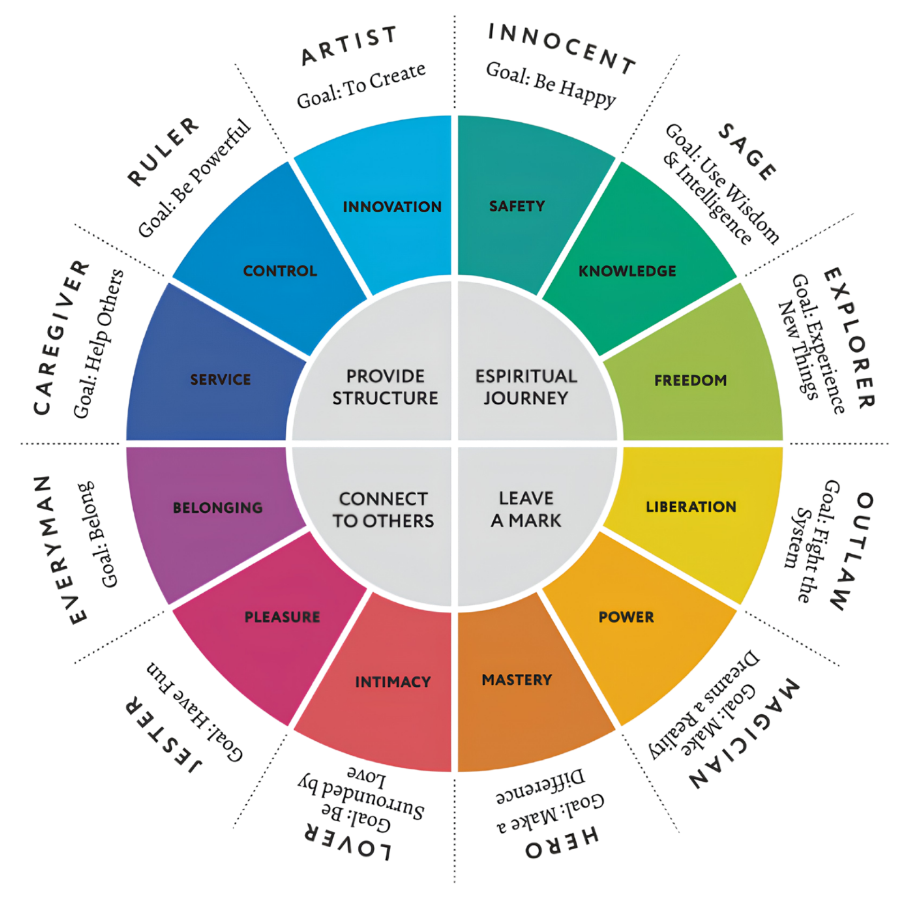
Introduced by psychiatrist Carl Jung, archetypes are universal, mythic characters that reside within our collective unconscious. They represent fundamental human motifs and motivations.
In brand strategy, archetypes provide a powerful framework for defining a brand's tone, behavior, emotional role, visual style, and customer experience. By aligning with a specific archetype, a brand taps into a well-established psychological pattern, making its messaging instantly recognizable and deeply resonant with target audiences.
Why Archetypes Matter in Brand Strategy
In crowded markets, generic claims like "innovative," "premium," or "customer-focused" fail to distinguish a brand. Archetypes help brands move beyond these table-stakes attributes to own a distinct emotional territory. A brand that knows its archetype knows exactly how to respond to a crisis, how to design its packaging, and how its customer service agents should speak. It provides an undeniable compass for consistency.

The Sixteen Archetypes
The Hero
The Caregiver
The Sage
The Rebel
The Explorer
The Creator
The Ruler
The Everyman
The Jester
The Magician
The Innocent
The Lover
The Advocate
The Visionary
The Strategist
The Entertainer
Mapping the Competitive Landscape
Mapping market competitors across the Jungian personality map allows a marketer to ensure there is a clear, consistent, and ownable personality expressed in their public communications.
If all competitors are congregating around the "Sage" archetype (focusing on expertise and data), there may be a massive whitespace opportunity to adopt the "Jester" or "Rebel" archetype, completely disrupting the category expectations and instantly capturing attention.
Applying the Model Effectively Across Your Organization
Identify the brand's core motivation
Look beyond the product. What is the emotional drive behind the company?
Audit current brand signals
Review the website, social media, sales calls, and packaging. What archetype are you unintentionally projecting?
Develop archetype-based messaging
Ensure your value proposition is written in the voice of your chosen archetype.
Align visual identity with personality
Colors, typography, and photography must evoke the same psychological response as the messaging.
Operationalize the personality
Extend the archetype into internal culture and operational processes (detailed below).
Maintain consistency during growth and change
Use the archetype as a filter for all future decisions, ensuring the brand remains true to its core self.
Operationalizing the Personality
Archetypes should not live exclusively in the marketing department or advertising campaigns. To be truly authentic, they must be operationalized across every facet of the organization. The archetype must guide:
Examples in Practice:
A Caregiver brand should be empathetic, patient, and reassuring in its customer service interactions.
A Rebel brand should challenge industry conventions not just in ads, but in its pricing models and communications.
A Ruler brand should feel polished, confident, and highly controlled from leadership memos to the unboxing experience.
An Everyman brand should be accessible, simple, relatable, and treat customers as equals rather than speaking down to them.
Conclusion
The strongest brands are not just recognized—they are felt. By aligning with a core Jungian archetype and applying it consistently across every touchpoint, brands become more coherent, authentic, memorable, and defensible in the minds of their customers.
We value your privacy
We use cookies to enhance your browsing experience, serve personalized content, and analyze our traffic. By clicking "Accept All", you consent to our use of cookies.